

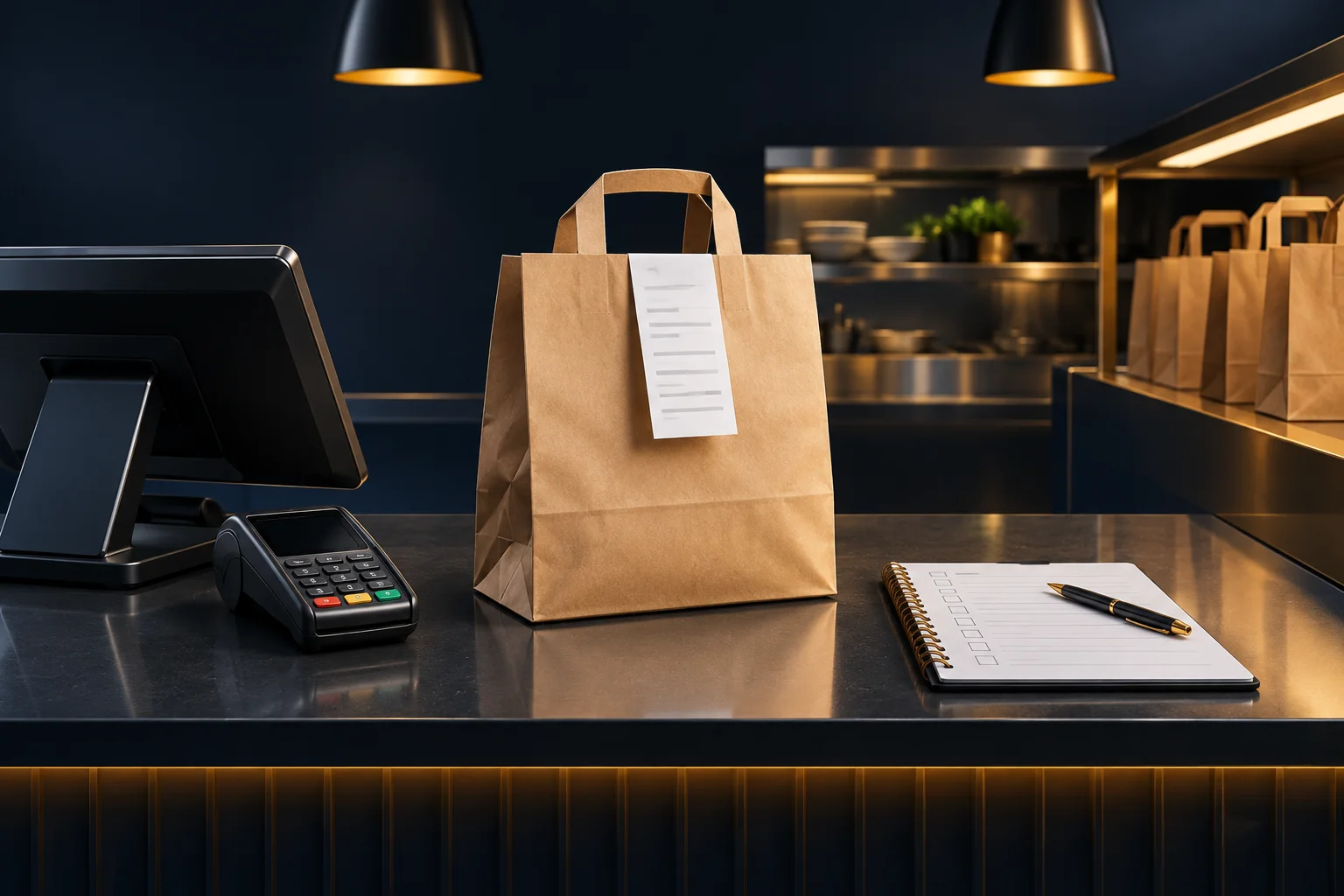
Set a realistic expectation before checkout
Customers need to understand what their collection time means. An estimated preparation time is different from a confirmed collection slot. Use wording that reflects how your takeaway actually works, and avoid describing an order as ready merely because checkout is complete. If timing is not confirmed at checkout, explain how the customer should establish when to arrive.
NeroWeb supports direct online ordering with menus, product options, configured collection or delivery and checkout. Actual order availability, stock controls, kitchen routing and supported payment methods depend on merchant setup. Check what your own setup presents to customers before writing instructions around it. Do not assume automatic ready messages, live progress updates or a particular payment option are available.
- Review the collection wording visible during a customer order.
- Distinguish an estimated time from a confirmed time wherever you communicate it.
- Choose a realistic contact route for customers who need clarification.
Tell customers exactly where to collect
An address gets someone to the premises; collection instructions get them to the right person. Say whether customers should join the main queue, approach a separate counter or speak to a member of staff. If the entrance is easy to confuse with another doorway, add a simple identifying detail. Only describe arrangements that actually exist.
Ask customers to have the order reference ready, if your order record provides one, and give an alternative such as the name used for the order. They should not have to announce their full address or payment details in a crowded shop. Keep the same instructions wherever customers encounter them, including any customer-facing messages your setup supports and signage at the counter.
Before and after: replace a vague collection message
Hypothetical example: a takeaway tells customers, “Collect in 20 minutes.” Customers interpret this as a guarantee, queue with people placing new orders and give only their first name. Staff then search several orders while bags wait on the counter. The problem is not simply the preparation time: the message leaves the arrival and identification process unexplained.
A clearer version would be: “Estimated collection time: 20 minutes after ordering. Come inside and speak to the collection counter on the left. Have your order reference ready, or tell us the name used for the order. If you arrive before your order is ready, we will explain the wait.” This wording is suitable only if it matches that takeaway’s actual layout and process.
The improved message separates an estimate from a promise and gives the customer an obvious next step. If the kitchen falls behind, staff still need to give an honest revised estimate when the customer asks or arrives. Clear initial wording does not replace communication about a delay.
Use a short, consistent handover check
At a busy counter, a customer saying “that is mine” is not enough to identify a bag. Ask for the reference or order name, find the corresponding record and compare it with the packed order. Where names are similar, confirm an item from the order discreetly rather than guessing.
Before releasing the order, check the number of bags, drinks and separately packed extras against the record. Confirm that selected product options have been accounted for, and verify payment status using your actual records rather than the customer’s presence or a bag label. If anything is unclear, pause the handover and ask the responsible colleague to resolve it.
- Match the customer’s details to the order record.
- Match the record to the correct bags and separate items.
- Check selected options and resolve any discrepancy.
- Confirm whether payment is complete or still required.
- Tell the customer how many bags and separate items they are receiving.
Check whether the instructions work during a real shift
Choose a shift to observe the journey from arrival to handover. A useful success check is whether customers can find the collection point and identify their order without staff repeatedly explaining the basics. Also watch for bags being reopened to find missing extras, uncertainty over payment and customers arriving much earlier than intended.
Your next action is to review one customer-facing collection message alongside the colleague who usually hands orders over. Compare every sentence with the real process, amend unclear wording and brief the team on the same handover checks. If you want to change how collection is configured in NeroWeb, confirm the available options with the team before promising customers a new workflow.
GOOD TO KNOW
Common questions
What should customers bring when collecting?
Ask for the order reference where available, or the name used to place the order. Explain this before arrival. Customers should not need to read out sensitive payment information to identify their food.
What if a customer arrives before the order is ready?
Find their order, explain its current position and give a realistic estimate if you can. Tell them where to wait without blocking the collection point. Do not describe an unverified estimate as a guaranteed handover time.
What if an item is missing at handover?
Keep the order at the counter while staff compare the packed items with the order record. Explain the discrepancy and the available resolution before handing it over, rather than asking the customer to discover it at home.
Does NeroWeb automatically tell customers their order is ready?
Do not assume this is available. Confirm the customer communications supported by your merchant setup with the team, and base your collection instructions on the process you can actually provide.