

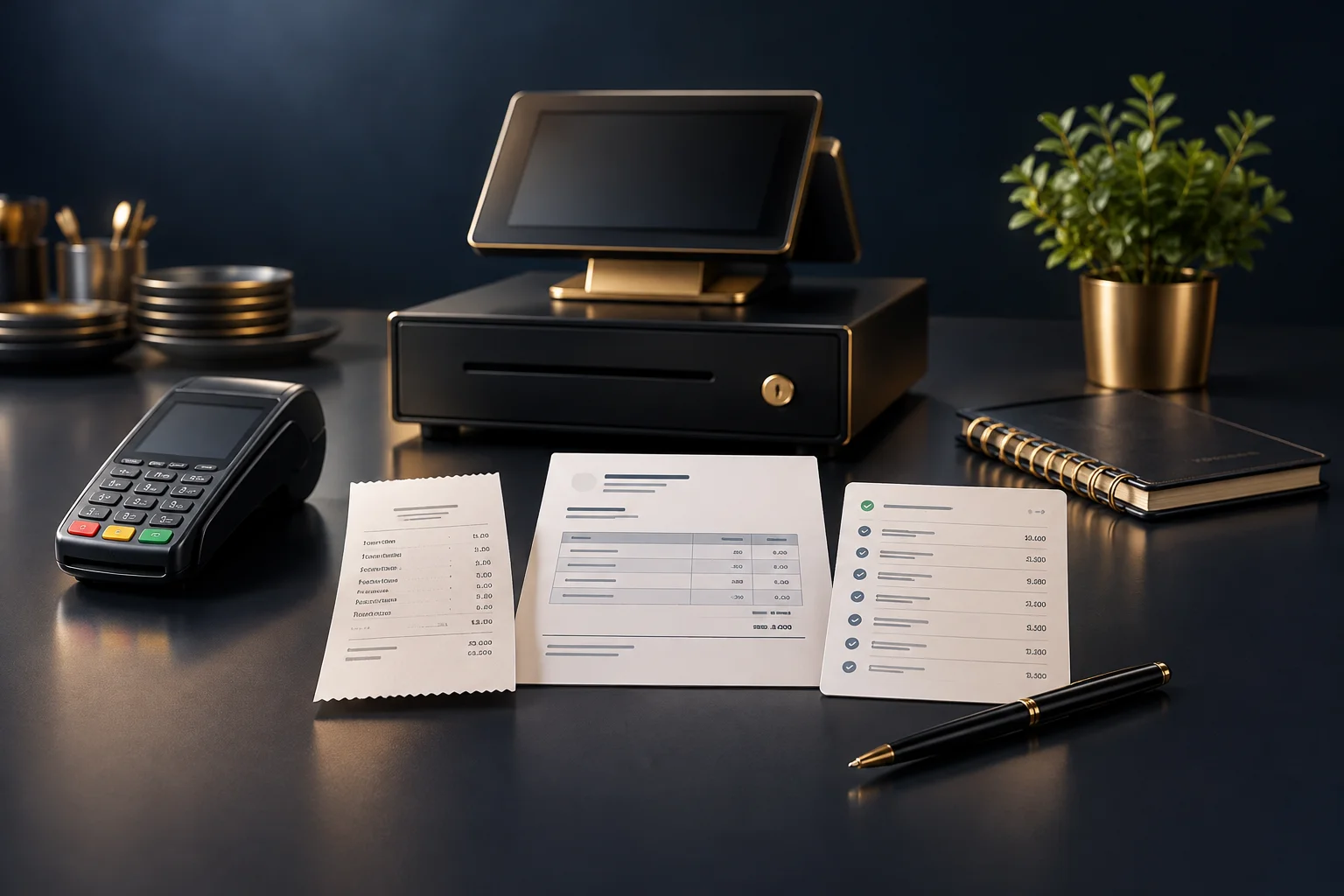
Three records, three different questions
An invoice sets out what a customer is being charged for. It may identify the items, quantities, total and payment terms. It helps you explain the amount requested, but its existence alone does not tell you whether the customer has paid. A supplier invoice serves the same operational purpose when your shop is the buyer.
A receipt acknowledges a payment received. Depending on its detail, it may also show what was bought, where and when. It is useful when a customer asks about a purchase, but it may not explain an earlier deposit, a remaining balance or every detail agreed before the sale.
A payment record is evidence from the payment side, such as a card transaction entry or bank statement entry. Its status and reference help establish what happened to the money. A transaction entry may not describe the goods, while a receipt may not show whether a payment was later refunded. Read each record for the question it can actually answer.
Keep the evidence together, not the income three times
Keeping three records does not mean recording three sales. They may be supporting evidence for one purchase. Use a consistent sale or invoice reference to connect them, and make clear which document describes the charge and which records relate to payment. Ask your bookkeeper how they want those links presented before changing your recording routine.
Not every counter sale needs a separate invoice for this workflow to make sense. A detailed till receipt and payment record may be the documents available. Equally, an invoice paid in instalments may have several related payment records. Organise the evidence that actually exists rather than creating duplicate documents simply to complete a set.
Hypothetical example: a deposit and collection payment
Imagine a homeware shop taking an order for lamps costing £240. The shop issues an invoice describing the order. The customer pays a £60 deposit by card, receives a deposit receipt, then pays the remaining £180 on collection and receives another receipt. Both payments have their own transaction records.
The invoice explains the £240 charge. The two receipts acknowledge the amounts received, while the transaction records help the owner check the payment outcomes. A search for £240 alone would miss the two-part payment pattern. Linking everything to the order reference makes the sequence understandable.
A successful check is observable: someone who did not handle the sale can find the invoice, identify both payments and explain why no balance remains. If one transaction is shown as pending rather than completed, the owner should investigate its current status instead of assuming the receipt settles the question.
Check mismatches before filling in the gaps
When the records disagree, start with the reference and timeline, not just the amount. Two customers can spend the same total, and a payment date may differ from the date money appears in an account. A combined payout can also differ from an individual sale, so check the available transaction and payout detail before drawing conclusions.
Keep the original evidence and add a clear note about anything unresolved. Do not quietly change a document to make the figures agree. If a customer asks whether they have paid, explain what you can confirm and what still needs checking, without exposing another customer's transaction information.
- Match the order or invoice reference, amount and relevant dates.
- Check for deposits, split payments, refunds or cancelled attempts.
- Read the recorded payment status rather than relying on a screenshot alone.
- Ask the payment provider about unclear transaction outcomes and your bookkeeper about recording questions.
Prepare a record trail your bookkeeper can follow
Choose a consistent place for purchase documents and supporting payment evidence. Use meaningful references, keep files readable and note missing items. Give your bookkeeper a short explanation of exceptions, such as a deposit carried forward or a refund awaiting clarification, rather than leaving them to reconstruct the story.
NeroBooks provides bookkeeping tools for business records, income, expenses, receipts and reports. Before adopting a particular document-linking or recording workflow, verify the specific features available in your current account. Your next action is to review one recent sale with your bookkeeper and agree how its supporting evidence should be organised.
GOOD TO KNOW
Common questions
Does an invoice marked paid replace a payment record?
It records an acknowledgement, but the underlying payment evidence helps explain when and how payment occurred. Keep the supporting reference where available, particularly for instalments or disputed outcomes.
Must every shop sale have three separate documents?
This is an organisational approach, not a statement of legal requirements. Some sales have a receipt and payment record but no separate invoice. Ask an appropriate adviser about requirements affecting your business.
What if a receipt is missing?
Keep the evidence you have, note what is missing and request a copy from the issuer where possible. Ask your bookkeeper what further explanation they need rather than inventing a replacement.